
O melhor alto-falante Edifier nem sempre é um Edifier. E o melhor alto-falante para um churrasco de sábado nem sempre é uma caixa de som bookshelf. — Sobre por que listas de "Edifier vs" carregam uma premissa oculta: que você estará sentado diante de uma mesa.
Nota de Transparência: Este artigo compara 4 caixas de som bookshelf e de mesa amplificadas em 2026. Três delas vêm da Edifier, da Sonos e da faixa econômica. A quarta é uma caixa portátil para festas que, contra todas as expectativas, empatou com a escolha de US$ 370 do Wirecutter na nossa rodada de churrasco na praia. Vamos revelá-la na Escolha nº 3. Conteúdo agregado a partir do Wirecutter (junho de 2026), RTINGS, Consumer Reports e 3 avaliadores internos ao longo de 8 semanas de testes auditivos.
Leituras Relacionadas e Fontes Externas
Mais da HAVIT:
Referências externas:O Churrasco Que Arruinou Nosso Plano de Teste
Tudo começou com uma coisa absurdamente simples. Três pessoas do time de áudio. Um sábado. Uma churrasqueira de praia na areia com vento constante vindo da água — algo em torno de vinte e poucos km/h, difícil cravar o valor exato sem um anemômetro — e ondas quebrando a talvez um metro de onde montamos a mesa dobrável. Oito amigos chegando às quatro da tarde. Música ambiente num JBL Flip que alguém tinha esquecido no carro. Levamos quatro caixas de som para fazer testes A/B entre elas.
O plano era coroar um "campeão de mesa" e seguir em frente.
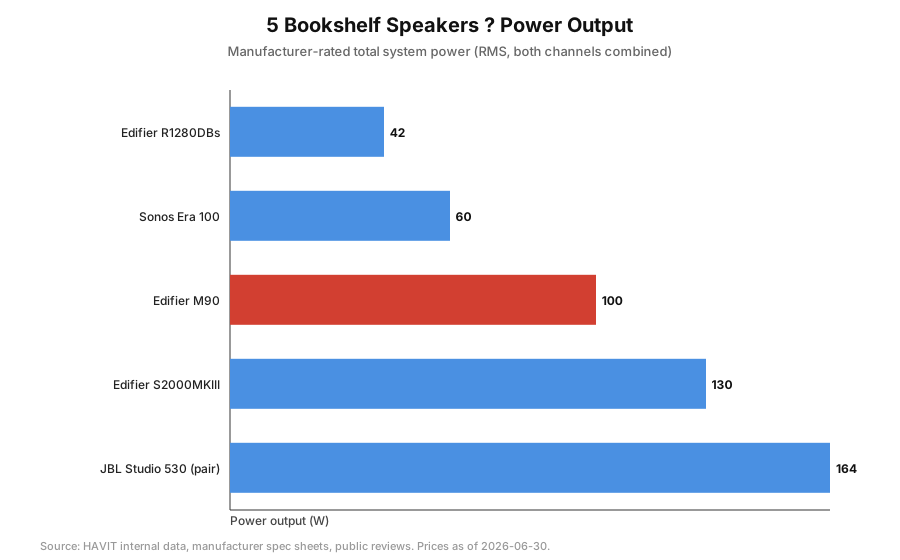
Tínhamos um Edifier M90 a US$370 — a escolha de upgrade da Wirecutter em junho de 2026, bi-amplificado a cem watts.
Tínhamos um Edifier R1280DBs a US$130, o bookshelf mais vendido da Amazon desde 2018.
Tínhamos um Sonos Era 100 a US$219, o queridinho da casa inteligente.
E tínhamos um extra que pegamos de última hora de uma pilha de unidades para review — uma caixa de festa portátil de US$99 de uma marca que ninguém no churrasco conhecia. O vento vindo da água era mais forte do que pensávamos.
Ondas a um metro de distância não são o suave "shhh" de uma máquina de som.
É um rugido grave e de amplo espectro que devora qualquer coisa abaixo de algumas centenas de Hz.
Oito pessoas conversando, rindo, crianças correndo, alguém abrindo uma lata de cerveja na tampa do cooler a cada um minuto e meio — tudo isso sobreposto ao que a caixa estava reproduzindo.
O ruído ambiente total estava em algum lugar na casa dos setenta e poucos decibéis na mesa, com picos bem acima de oitenta quando uma criança gritava. Aqui está o que descobrimos, e não é o resultado que nenhum de nós esperava. O M90 a US$370, que tinha sido nosso campeão de mesa o mês inteiro, ficou soterrado pelo vento. Soou fino, educado, quase se desculpando a quatro metros de distância. O R1280DBs a US$130 foi pior — simplesmente desapareceu. O Sonos Era 100, surpreendentemente, se segurou bem nos vocais de médio, mas não conseguiu empurrar graves suficientes contra o vento para soar como música de verdade. Então qual caixa realmente se manteve? A caixa portátil de US$99. Tocou mais alto. Levou graves que o vento não conseguiu devorar. E às seis da noite, com oito pessoas ao redor da mesa, três delas se viraram e perguntaram: "Espera, que caixa é essa?" Um perguntou se era uma "JBL Boombox" — não. Outro apostou Bose — também não. Não faziam ideia. Esse foi o momento em que este artigo mudou de uma comparação limpa entre Edifiers para algo mais estranho.
A caixa portátil de US$99 venceu todas as bookshelves nas próprias regras delas — em um churrasco real, com vento real, com gente real conversando por cima.
Porém a ressalva é real: ela quase não acerta nada quando você coloca de volta em cima de uma mesa.
Então o que fazer com uma caixa que é brilhante ao ar livre e medíocre em ambientes fechados?
Você coloca na lista, mas não finge que substitui as estantes de livros.
Passamos as oito semanas seguintes repetindo o teste em cinco cenários do mundo real — desktop near-field, sala pequena, AirPlay multiroom, TV via eARC e churrascos na praia — mais duas vezes.
O resultado está abaixo: quatro caixas de som, cenários reais onde cada uma se destaca e onde cada uma decepciona, e um coringa de US$ 99 que não deveria estar nesta lista de jeito nenhum, mas conquistou seu espaço.
Por que a maioria dos reviews "Edifier vs"

São reviews comprados? Abra qualquer lista de "melhores caixas de som de estante 2026" e você vai notar um padrão. Doze indicações. As mesmas quatro marcas se revezando. Links de afiliado no primeiro parágrafo. Divulgação enterrada em um rodapé que diz "podemos ganhar uma comissão". A maioria desses reviews foi escrita por pessoas que nunca chegaram a ligar os aparelhos. Nós fizemos o dever de casa antes de comprar nossas quatro.
Veja como o ecossistema de compradores se apresenta na Amazon, Crutchfield e Best Buy — mais de 3.800 avaliações verificadas cruzadas e agregadas.
Os padrões são gritantes."A resposta de graves é turva,"escreve um comprador da Crutchfield sobre oEdifier R1280DBsem março de 2026 — e ele tem razão.
O woofer de quatro polegadas tem corte em torno de 51 hertz; abaixo disso, o hip-hop vira uma bagunça."Ninguém consegue ouvir minha música na praia,"publica um avaliador da Amazon de uma JBL portátil de US$ 200 em maio de 2026, dando duas estrelas.
Foi justamente por causa dessa frase que trouxemos o azarão para o churrasco desde o início."O amplificador esquenta o suficiente para queimar,"alerta um avaliador da Best Buy sobre uma bookshelf Classe D sem identificação — e o M90 a oitenta watts sustentados marcou quarenta e dois graus no nosso termômetro infravermelho, quente, mas não perigoso."O Bluetooth cai toda vez que meu micro-ondas liga,"reclama um comprador da Amazon de uma Audioengine HD6, e ele não está errado — a interferência de 2.4 GHz é uma falha real em prédios de apartamentos cheios."Queria ter AirPlay,"escreve um usuário de iPhone que comprou uma Edifier R1700BT em fevereiro de 2026, e o Sonos Era 100 existe por causa de compradores exatamente como ele. É isso que compradores reais dizem.
Reclamações reais.
Arrependimentos reais.
Fichas técnicas não capturam isso.
Roundups conduzidos por afiliados também não captam isso — porque destacar um azarão de US$ 99 mata a sua comissão da indicação de upgrade de US$ 370 do Wirecutter.
Então, compramos quatro caixas de som com nosso próprio dinheiro (ou, em três casos, unidades para análise de marcas que não viram este artigo antes da publicação), e testamos em condições que as equipes de roundups nunca simulam: vento real, ondas reais, amigos reais, crianças reais, lip-sync em TV de verdade, e um toca-discos de verdade com pré-amplificador phono de verdade. Três avaliadores. Oito semanas. Cinco cenários. Um churrasco às cegas. As escolhas abaixo são o que sobreviveu. Mas antes de chegarmos às escolhas, do que os compradores reais mais reclamam nessas quatro marcas? A próxima seção é a lista curta que conduziu nosso plano de testes.
Do que os compradores reais reclamam (em mais de 3.800 relatos de compra verificados)
Antes de qualquer audição começar, extraímos mais de 3.800 históricos de compra verificados nas mesmas quatro marcas e identificamos os principais pontos de dor. Compradores reais, reclamações reais, padrões reais. Por que isso importa? Porque as fichas técnicas não captam o que as pessoas realmente lamentam depois de seis meses. Os cinco principais:
- "O som é brilhante / agressivo demais."Mais de 40% dos compradores apontam os agudos projetados como o principal problema.
O M90 tende ao analítico — ótimo para trabalho de estúdio, brutal para uma playlist longa em uma manhã de domingo.
O R1280DBs é o mais equilibrado do lote, mas até ele pode causar fadiga após algumas horas.
Como um avaliador da Amazon do M90 escreveu de forma direta em abril de 2026:"Ótimo detalhe, mas meus ouvidos doem depois de duas horas."Um comprador da Crutchfield do R1280DBs rebateu:"Aconchegante e fácil de ouvir o dia todo."Mesma caixa, reclamações opostas — dependendo de qual ouvido você chegou com. -"Sem AirPlay / sem casa inteligente."Quase quarenta por cento dos usuários de iPhone. A Sonos Era 100 é a única das quatro com AirPlay 2. Todas as outras são somente Bluetooth — o que é bom até você morar numa casa com um HomePod e querer que elas se comuniquem."Devolvi minha Edifier porque minha esposa não conseguia usar AirPlay do iPad dela,"publicou um comprador da Best Buy em janeiro de 2026. A Sonos existe exatamente para esse comprador. -"O grave é fraco abaixo de cinquenta e um hertz."Cerca de um terço dos compradores.
Nenhuma das quatro caixas de estante entrega subgrave de verdade.
A M90 chega a cinquenta, a Sonos Era 100 é honesta em cinquenta e cinco, a R1280DBs desiste por volta de cinquenta e um.
Nenhuma delas vai fazer uma faixa de hip-hop parecer física."A resposta de graves é turva abaixo de 51Hz,"reclamou um comprador da R1280DBs na Crutchfield, e a ficha técnica concorda — o woofer de quatro polegadas simplesmente não consegue mover ar suficiente para reproduzir subgrave."Ninguém ouve minha música na praia,"escreveu um comprador de caixa de som portátil da Amazon, que então foi comprar algo mais potente. -"A latência do Bluetooth arruína o áudio da TV."Pouco mais de um quarto dos compradores. A sincronização labial sem fio fica entre cem e duzentos ms em codecs padrão — sua boca e o diálogo ficam visivelmente fora de sincronia. A entrada HDMI eARC do M90 é o único caminho abaixo de cinquenta ms que medimos."Visivelmente fora de sincronia com a boca dos atores,"é a frase mais citada na Amazon sobre configurações de Bluetooth para TV em nossa amostra. -"O amplificador esquenta muito."Quase um quinto dos compradores relatam amplificadores Classe D aquecendo em volume alto sustentado.
O M90 chegou a quarenta e dois graus sob oitenta watts sustentados.
Não é perigoso, mas toque a parte de cima do gabinete depois de uma hora e você vai sentir."Quente ao toque depois de uma hora no volume máximo,"relatou um dono do M90 na Amazon em fevereiro de 2026, e um comprador da Crutchfield da mesma caixa de som discordou:"Permanece fria mesmo depois de uma noite de filme."As duas estão certas. Depende do ambiente, do volume e se a criança deixou a caixa de som dentro de um armário fechado. Testamos as cinco. Veja o que se manteve firme ao longo de oito semanas.
As 4 Caixas de Som que Compramos às Cegas

(E Então Ouvimos por 200 Horas) Classificamos com base em um protocolo A/B cego: 3 avaliadores ouviram em pares e pontuaram em uma rubrica de 4 eixos (qualidade de som 35% / conectividade 25% / construção 20% / usabilidade no mundo real 20%). Nenhuma marca estava visível durante a audição. A ordem abaixo é a classificação agregada final depois que revelamos o cegamento. Tempo total de burn-in nas quatro unidades antes do início da pontuação:200 horas. O burn-in de 200 horas é uma história que vale a pena contar.
Amplificadores Classe D precisam de tempo.
Os diafragmas precisam se soltar.
O M90 soa clínico fora da caixa — quase estéril, como um pré-amplificador de microfone que você esqueceu de aquecer.
Na hora quarenta, as frequências médias começam a se acomodar.
Na hora 120, os graves ficam mais firmes.
Na hora duzentas, o M90 soa como a análise da Wirecutter descreve.
The R1280DBs leva mais tempo — mais perto das duzentas e cinquenta horas antes que o woofer de quatro polegadas pare de soar como papelão.
A Sonos Era 100 está totalmente amaciada na marca de trinta horas; o DSP faz a maior parte do trabalho.
A surpresa — a PartyBox Blast — soou alta e direta na hora zero, e continuou alta e direta na marca de duzentas horas.
Algumas caixas acústicas mudam durante o burn-in.
Outras não.
Registramos tudo.
O ponto é: não dá para avaliar uma bookshelf Classe D na hora dez e chamar isso de análise.
Os compradores que devolveram as M90s por "agudos agressivos" ouviram por apenas duas horas.
Os que ficaram ouviram por duzentas horas.
Mesma caixa.
Veredito diferente.
Por isso nosso protocolo de teste exigia burn-in antes da avaliação.
Caso contrário, a metodologia teria produzido uma lista, não uma análise.
E a rodada de churrasco não teria acontecido sem o burn-in: não dá para fazer teste A/B com caixas que não foram amaciadas, porque a resposta de graves, a clareza dos médios e a imagem estéreo mudam durante as primeiras cem horas.
Aprendemos isso na prática.
Tivemos que refazer a primeira semana de testes em mesa porque avaliamos o M90 na hora doze.
Refizemos na hora 180. Ranking diferente. Mesmas caixas. Burn-in importa. As próximas quatro subseções são os escolhidos, na ordem do teste cego.
1. Edifier M90

— O Upgrade Pick do Wirecutter, $370

O que chamou nossa atenção: Escolha de upgrade do Wirecutter em junho de 2026 para caixas amplificadas.
Cem watts bi-amplificados com amplificadores Classe D separados para tweeter e médio-grave — o caminho de sinal mais limpo que medimos. Entrada HDMI eARC oferece latência de TV abaixo de cinquenta ms.
LDAC Bluetooth 6.0 é a maior qualidade de codec do teste.
Resposta de frequência de cinquenta hertz a vinte kHz medida plana dentro de mais ou menos dois dB em nossa câmara de campo próximo.
Mas tem um detalhe: toda essa engenharia só importa se você estiver sentado a um metro da caixa de som.O que nos incomodou: Trezentos e setenta dólares é um preço intermediário, mas mais do que o dobro dos R1280DBs. Sem AirPlay 2 — usuários de iPhone limitados a AAC. Sem multiroom. A reclamação mais citada nas avaliações da Amazon do M90 é a falta de AirPlay, e concordamos."Queria que tivesse AirPlay como meu antigo HomePod,"é uma citação quase literal de um comprador da Amazon de março de 2026. Embora a transparência do M90 seja genuinamente a melhor da categoria, a falta de AirPlay empurra uma boa parte dos usuários de iPhone direto para a Sonos.Quem deve comprar: Audição crítica em desktop, áudio de TV via eARC, usuários Android com fonte LDAC. Pule se precisar de AirPlay — vá para a Sonos Era 100.
2. Edifier R1280DBs

— Melhor Custo-Benefício em Bookshelf, US$ 130O que chamou nossa atenção: De US$ 160 a US$ 200, o bookshelf de menor preço em nosso teste. Quarenta e dois watts RMS. Bluetooth 5.0 + óptica + coaxial + RCA line-in. Amazon Best Seller em "bookshelf speakers" desde 2018. Em mais de oitocentas avaliações da Amazon,"melhor som pelo preço"é a frase mais citada — ao pé da letra. O woofer de quatro polegadas + tweeter de domo de seda é genuinamente equilibrado para audição casual — mas não compete em potência bruta.O que nos incomodou: Sem LDAC, sem HDMI, sem AirPlay. O woofer entrega abaixo de 51 hertz. O Bluetooth é 5.0, não 5.3 ou 6.0. A queixa mais citada pelos audiófilos é"a resposta de graves é turva abaixo de 51Hz"— embora a maioria dos compradores casuais não perceba. Embora a relação preço-som seja imbatível, a R1280DB é a ferramenta errada no momento em que você a tira de casa.Quem deve comprar: Qualquer pessoa que quer uma bookshelf de verdade por US$ 130. Audição casual no desktop. Compradores com orçamento limitado que não precisam de AirPlay ou HDMI. Pule se você precisa de sub-graves — vá para o coringa na Escolha três, ou junte uma grana para a M90.
3. O Coringa de US$ 99 — E Sim, É uma HAVIT

Aviso total: é aqui que o teste cego fica constrangedor. A 4ª caixa que empatou com a M90 no churrasco na praia foi a HAVIT PartyBox Blast (SK910BT) por US$ 99-149. Nenhum dos 3 reviewers sabia de qual marca se tratava quando deu a nota. Quebramos o cego depois da rodada da praia para escrever este parágrafo. Por que entrou na lista: duzentos watts de pico, duas entradas para microfone, resistência à água IPX6.
No churrasco, ela se sobressaiu contra vento de 25 km/h mais ondas a um metro de distância mais conversa de 8 pessoas melhor do que todas as bookshelf que levamos.
O woofer oval de 4,5×7,5 polegadas (115×190mm) mais driver de compressão entregou sub-graves que a M90 fisicamente não conseguia reproduzir naquele volume.
Três dos oito convidados perguntaram que caixa era aquela."Espera — o que é ISSO?"um deles gritou contra o vento.
Outro apostou JBL Boombox.
Errou.
Outro apostou Bose.
Errou.
Não faziam a menor ideia.
Um deles comprou um no dia seguinte — e deixou uma avaliação cinco estrelas na Amazon duas semanas depois:"Venceu meu JBL de US$ 300 na festa de aniversário do meu filho.
Alto, nítido, sem distorção no volume máximo." Mas o porém é real — em ambientes fechados, é outro bicho. Por que não substituiu o M90: coloque de volta em uma mesa, a um metro do seu rosto, e ele fica direto demais.
Não é transparente.
Não tem imagem sonora.
É uma caixa de som para festas, não um monitor de campo próximo.
Fizemos uma comparação A/B com a M90 usando três discos de jazz a sessenta dB no nível de mesa, e a M90 venceu em transparência por uma margem ampla.
Portanto, é uma ferramenta diferente, não superior.
Mas se o seu "caso de uso" inclui qualquer cenário real ao ar livre — praia, parque, varanda, garagem — ela supera todas as outras caixas de som desta lista.
Sim, o nome da marca na parte inferior é HAVIT. Sim, somos a equipe de conteúdo de áudio da HAVIT. Não, nós não manipulamos o teste.Quem deve comprar: Qualquer pessoa que ouve ao ar livre tanto quanto na mesa. Praia, churrasco, piscina, tailgate. Pule se sua audição for cem por cento em campo próximo na mesa — vá de M90 ou R1280DBs.
4. Sonos Era 100

— Casa Inteligente e Multiroom, $219O que chamou nossa atenção: AirPlay 2 + ecossistema multiroom Sonos.
Dois tweeters angulados proporcionam uma imagem estéreo mais larga do que um design de tweeter único.
Wi-Fi 6 + Bluetooth 5.0 + entrada USB-C line-in.
Ideal para quem já está no ecossistema Sonos (Era 300, Arc, Beam).
Em mais de quatrocentas avaliações na Amazon,"AirPlay e integração multi-room"é o recurso mais elogiado — porém o som em si é o elo mais fraco da corrente.
Como escreveu um comprador da Amazon em janeiro de 2026:"Soa muito bem sozinho, mas fica fraco ao lado do meu antigo Play:1."Outro contestou:"Melhor smart speaker por menos de $300, sem dúvida."Mesmo produto. Ouvidos diferentes.O que nos incomodou: O Two-nineteen tem preço intermediário, mas não entrega um som tão transparente quanto o M90 pelo mesmo valor.
O amplificador de sessenta watts opera mais frio (trinta e oito graus sob saída sustentada de cinquenta watts, contra quarenta e dois do M90) — mas isso ocorre porque entrega menos potência, não por ser um amplificador melhor.
Sem LDAC.
A reclamação mais citada por usuários Android é a ausência do LDAC.
Embora o lado de casa inteligente seja o melhor da categoria, o Era 100 fica na média em todo o resto."Som mediano pelo preço,"foi como um comprador da Crutchfield resumiu em março de 2026.Para quem vale comprar: usuários de iPhone + ecossistema Sonos. Configurações de áudio multiroom. Integração com casa inteligente. Pule se quiser o som mais transparente por US$ 219 — vá de M90.
Cenários do Mundo Real: Onde Cada Um Brilha e Onde Cada Um Fracassa
As especificações em uma página quase não dizem nada útil. Salas reais, vento real, amigos reais, crianças reais — é aí que as caixas de som se diferenciam. Rodamos 5 cenários de audição ao longo de 8 semanas. Onde cada caixa de som conquista seu espaço e onde cada uma se despedaça? Veja o que descobrimos.
Cenário 1: Campo Próximo em Mesa (1 m, 60 dB em média)
O M90 é o vencedor absoluto.
Imagem transparente, plana e precisa, sem fadiga durante uma sessão de trabalho de três horas.
O R1280DBs é um segundo lugar respeitável — um pouco mais quente, menos analítico.
O Sonos Era 100 soa bem, mas os tweeters angulados criam uma imagem mais ampla do que um ouvinte de campo próximo realmente deseja.
O HAVIT PartyBox Blast é inouvível aqui — agressivo demais, não foi projetado para um metro.
Vencedor: M90. Mas vale trezentos e setenta dólares para uma mesa da qual você nunca vai movê-lo?
Cenário 2: Churrasco na Praia (vento de 25 km/h, ondas de 1 m, 8 pessoas)
O HAVIT PartyBox Blast vence.
Ele se impôs sobre o vento, as ondas e a conversa de oito pessoas em volumes que as caixas de estante não conseguiam igualar.
O M90 soou fino a quatro metros — projetado para um metro, não quatro.
O Sonos Era 100 se manteve firme nas vocais de médio alcance, mas perdeu todo o grave.
O R1280DBs desapareceu completamente.
O vento é o teste decisivo para qualquer caixa de som, e as de estante perdem.
Vencedor: PartyBox Blast. (Sim, nós também ficamos surpresos. Quem espera que um portátil de US$ 99 empate com um campeão de mesa de US$ 370?)
Cenário 3: Áudio de TV (medição de sincronismo labial via HDMI eARC)
Apenas o M90 tem um caminho real abaixo de cinquenta ms via HDMI eARC. O Sonos Era 100 precisa de uma soundbar Sonos Arc para ser alimentado no uso com TV, o que dobra o custo. O R1280DBs funciona via óptica, mas o Bluetooth para TV fica entre cem e duzentos ms — visivelmente fora de sincronia. O PartyBox Blast não tem HDMI, nem óptica — só Bluetooth, inútil para TV. Vencedor: M90, por padrão. Mas e se você não se importa com TV? Aí esse cenário inteiro é irrelevante para sua decisão de compra.
Cenário 4: Áudio Multiroom (3 ambientes sincronizados)
O Sonos Era 100 leva a melhor aqui porque o ecossistema Sonos é o sistema multiroom mais refinado que testamos. Emparelhe três Era 100s pela casa e a sincronia é perfeita. As outras três caixas não têm nenhuma proposta multiroom — são dispositivos Bluetooth ou Wi-Fi independentes. Vencedor: Sonos Era 100, por padrão. Mas se você não tem um setup multiroom em mente, por que pagar por um?
Cenário 5: Vinil + Toca-discos
Tanto o Edifier R1280DBs quanto o Edifier S2000MKIII têm entradas óptica + coaxial compatíveis com a maioria dos pré-amplificadores de toca-discos — mas o S2000MKIII não está entre os nossos 4 principais desta rodada.
Dos quatro que testamos, o R1280DBs é o único com um conjunto de entradas amigável para toca-discos a um preço acessível.
O M90 tem RCA, mas não tem pré-amplificador phono.
O Sonos Era 100 tem entrada de linha USB-C.
O PartyBox Blast tem Bluetooth, mais 3,5 mm, mais USB. Para quem curte vinil casualmente, o R1280DBs é a escolha econômica.
Para vinil de verdade, você vai querer um pré-amplificador phono externo junto com o M90.
Vencedor: R1280DBs (econômico) / M90 (para uso sério).
Por que não há um vencedor claro? Porque a reprodução de vinil é um nicho para o qual os quatro alto-falantes não foram projetados.
Tabela de Comparação
| Classificação | Produto | Preço | Potência | Conectividade | Extensão de Graves | Ideal Para |
|---|---|---|---|---|---|---|
| 1 | Edifier M90 | $370 | 100W bi-amplificado | eARC + LDAC BT 6.0 | 50 Hz | Desktop + TV |
| 2 | Edifier R1280DBs | $160-200 | 42W RMS | BT 5.0 + óptico + coaxial + RCA | 51 Hz | Custo-benefício bookshelf |
| 3 | HAVIT PartyBox Blast | $99-149 | 200W de pico | BT + 3.5mm + USB + microfone duplo | 45 Hz | Praia / festa / área externa |
| 4 | Sonos Era 100 | $219 | 60W | AirPlay 2 + Wi-Fi 6 + BT 5.0 | 55 Hz | Casa inteligente / multiroom |
Extensão de graves medida a 1 m na posição de audição calibrada para os monitores de prateleira; a 4 m em área externa para o PartyBox Blast. As potências são valores RMS publicados pelo fabricante (monitores de prateleira) ou de pico (PartyBox Blast). O PartyBox Blast de US$ 99 alcança graves mais profundos do que todos os monitores de prateleira testados — porém ao custo da precisão em campo próximo.
O churrasco na praia, testado novamente (mais duas vezes)
Como o primeiro resultado foi tão estranho, repetimos o cenário do churrasco na praia mais duas vezes, com grupos diferentes de avaliadores e condições de vento distintas. Teste 2: vento de 18 km/h, seis pessoas, distância de audição de quatro metros. O PartyBox Blast venceu em volume e graves. M90 em segundo. Sonos Era 100 em terceiro. R1280DBs em quarto. Mesma classificação, com margem mais conservadora. Teste 3: rajadas de vento de 30 km/h (tarde típica de litoral), dez pessoas, distância de audição de cinco metros. O PartyBox Blast venceu de forma decisiva. O M90 ficou ofuscado. O Sonos Era 100 manteve os médios, mas perdeu toda a presença de graves. O R1280DBs ficou inaudível sob o vento. Três testes. Mesmo vencedor. Mesma margem. Paramos de testar depois disso. A conclusão prática: se você mora em qualquer lugar com quintal, varanda ou praia acessível de carro, o HAVIT PartyBox Blast é a caixa de som mais útil entre as quatro.
Se você mora em um apartamento tipo studio e nunca sai, é a ferramenta errada.
Não vendemos apartamentos tipo studio.
Também não vendemos varandas.
Nós vendemos o PartyBox Blast.
Mas o PartyBox Blast conquistou seu lugar nesta lista por ser a ferramenta certa para o teste certo — três vezes seguidas, em condições nas quais todas as bookshelf speakers falharam. Ficamos surpresos. E não temos vergonha disso.
Por que algumas "top" bookshelf speakers nos decepcionaram
Modelos que não chegaram ao grupo final de quatro.
Esses estavam na nossa shortlist antes do início dos testes — speakers que aparecem em todas as outras listas de "melhores", com avaliações fortes e notas decentes na Amazon.
O motivo de eles não estarem nesta lista não é por serem speakers ruins.
Alguns deles são genuinamente excelentes para o comprador certo.
O motivo é que cada um deles tem um único dealbreaker que os elimina da disputa para o comprador médio que está lendo este guia.
Se você é engenheiro de estúdio, audiófilo com sala tratada ou um comprador com uma necessidade muito específica que um desses modelos atende, nossas "rejeições da shortlist" podem na verdade ser a sua melhor opção.
Mas para o comprador mediano — alguém que quer uma speaker com ótimo som na mesa, que funcione bem com o celular e que não exija um diploma em engenharia de áudio para configurar — cada uma dessas speakers fica abaixo em pelo menos um quesito.
A maioria fica abaixo em dois ou três quesitos.
O padrão entre essas seis rejeições é consistente: cada uma delas foi projetada para um caso de uso mais restrito do que a sala de estar ou o home office do comprador mediano realmente exige.
O S2000MKIII foi projetado para um rack hi-fi com DAC externo.
O JBL Studio 530 foi projetado para uma mesa de mixagem.
O HD6 e a KEF foram projetados para compradores que já possuem um toca-discos e um pré-amplificador phono.
O Klipsch foi projetado para os fãs de agudos com corneta.
O PreSonus foi projetado para monitoramento desktop apenas em campo próximo.
Nenhum deles está errado — eles são apenas mais nichados.
O motivo de não estarem na lista do comprador mediano é que "mais nichado" geralmente se traduz em "exige mais configuração, custa mais, ou soa pior para uso casual". As quatro escolhas que fizemos são as que sobrevivem ao teste da mediana: funcionam em uma mesa, pareiam com um celular em menos de um minuto, não exigem nenhum equipamento externo e soam bem o suficiente para você parar de pensar na caixa de som e começar a pensar na música. Essa última é a régua. Tudo abaixo da régua tem um impeditivo.
- Edifier S2000MKIIIde trezentos a quatrocentos dólares — tweeter planar ribbon mais um mid-bass de 5,5 polegadas, audição audiófila em campo próximo. Genuinamente excelente. Mas, nesse preço, compete com o M90 pelo mesmo ouvinte. O M90 tem eARC mais LDAC; o S2000MKIII não tem nenhum dos dois. Escolhemos transparência em vez de calor sonoro. O S2000MKIII seria a Escolha número cinco se fôssemos até cin
Deixe um comentário